

Description
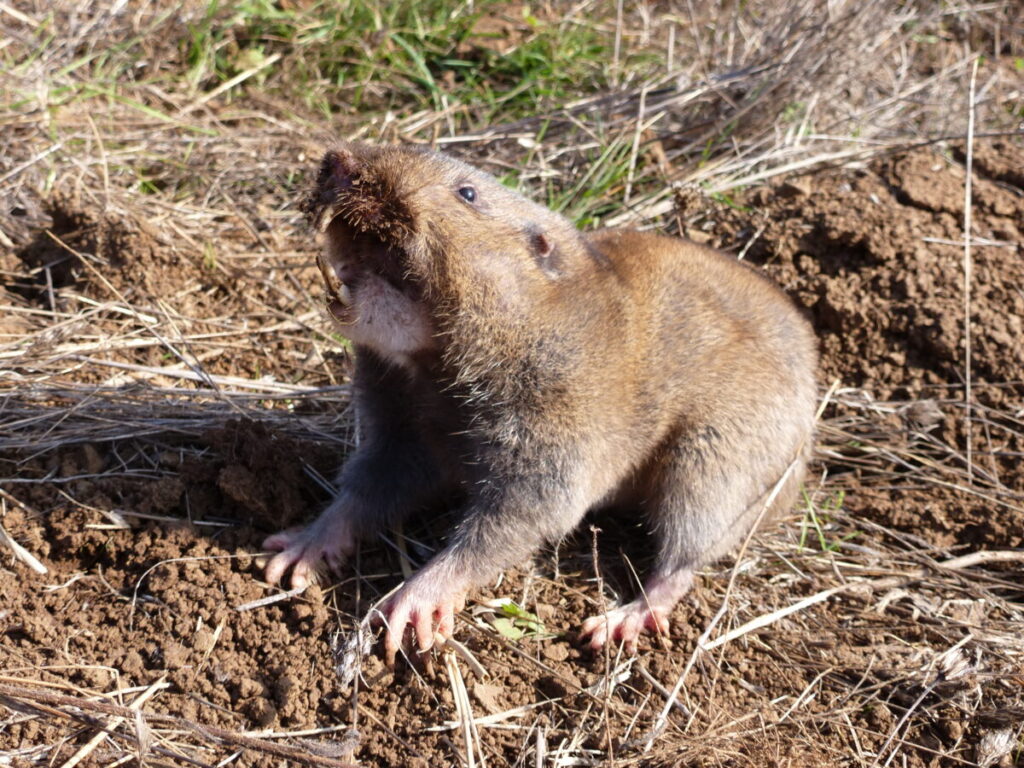
The Camas pocket gopher, also known as the camas rat or Willamette Valley gopher, is a remarkable rodent and the largest member of the genus Thomomys within the family Geomyidae. This species was first described in 1829 and is endemic to the Willamette Valley.
Appearance

The Camas pocket gopher is characterized by its compact, robust build, and distinctive fur-lined cheek pouches, which are used for carrying food and nesting materials. Its fur varies in color from light brown to dark gray, allowing for effective camouflage in its subterranean habitat. The gopher’s powerful forelimbs and well-developed claws are perfectly adapted for digging and excavating extensive burrow systems, distinguishing it from similar species.
Distribution
This species is primarily found in the Willamette Valley and the drainage areas of the Yamhill River and other tributaries of the Willamette River. Its range is limited to specific regions, making it an important focus for conservation efforts. Notably, the Camas pocket gopher is federally listed as a Species of Concern due to its restricted distribution and habitat requirements.
Habitat Preferences

The Camas pocket gopher is a fossorial species that thrives in habitats with rich, fertile soil, favoring areas with early seral plant communities or cultivated croplands that mimic early seral situations such as alfalfa and wheat fields. These environments provide the gopher with the necessary resources for foraging, nesting, and protection, contributing to its survival and well-being.
By shedding light on the unique characteristics, appearance, distribution, and habitat preferences of the Camas pocket gopher, we gain a deeper understanding of this fascinating species and the critical role it plays within its ecosystem.
Facts About Camas pocket gopher
- The Camas pocket gopher (Thomomys bulbivorus) is the largest member in the genus Thomomys.
- It is native to the Willamette Valley of Oregon and occurs only in this region.
- Camas pocket gophers have small, weak eyes that rarely open, small ears, short legs, powerfully-built shoulders, slim hips, and a nearly naked tail.
- This species is herbivorous, with a diet consisting of 100% plants, and forages exclusively on the ground.
- Adult Camas pocket gophers weigh around 359.9 grams, while their birth weight is approximately 6.1 grams.
- The species is federally listed as a threatened species due to its limited range in the Willamette Valley.
- Camas pocket gophers are known for making sounds with their teeth, including “chatter” and “grinding” sounds.
- They are important to their ecosystem as they contribute to soil aeration and nutrient cycling through their digging activities.
- The species plays a role in seed dispersal and plant diversity in their habitat.
- Camas pocket gophers are a unique and fascinating species that contribute to the biodiversity of the Willamette Valley ecosystem.


