

The brown fur seal, also known as the Cape fur seal, South African fur seal, and Australian fur seal, is a remarkable species of fur seal characterized by its unique physical and behavioral traits.
Description

The brown fur seal is the largest and most robust member of the fur seal family. Adult males display a light grayish-brown coat with a dark brown belly and a distinctive mane, while adult females and juveniles exhibit a lighter, more silver-gray appearance. These seals have large, broad heads with pointed snouts, and males can weigh up to 300 kilograms, while females are significantly smaller, weighing around 120 kilograms.
Appearance
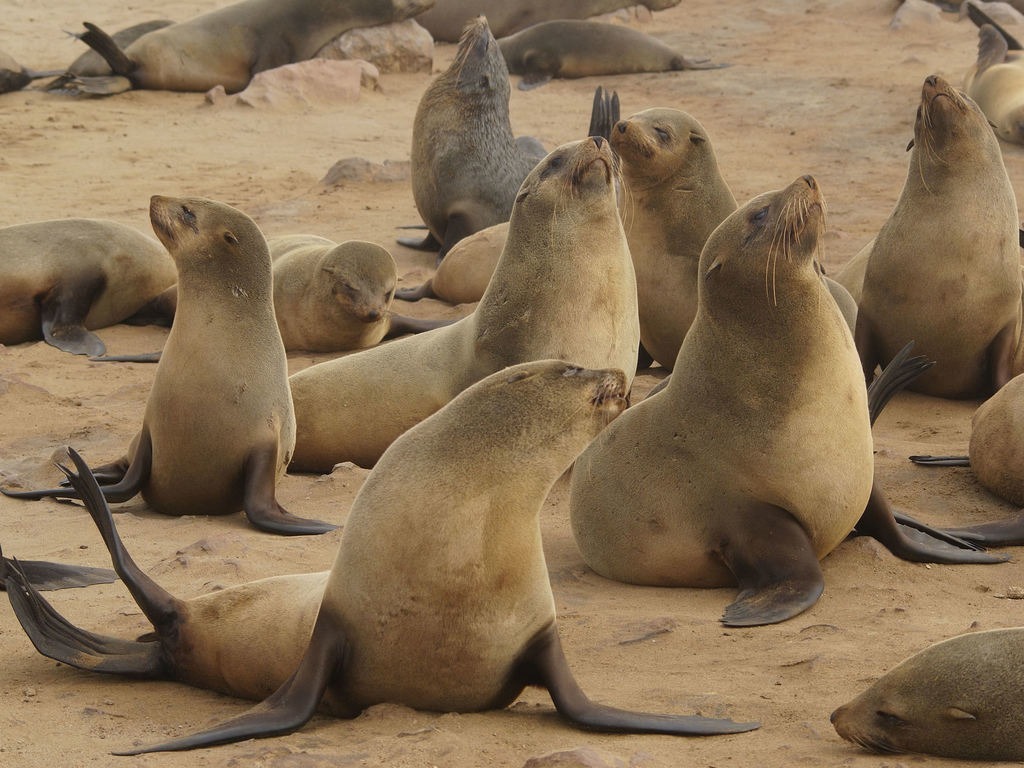
The brown fur seal’s appearance is distinguished by its light grayish-brown coat, which sets it apart from other fur seal species. Adult males have a mane and a dark brown belly, while females and juveniles have a more silver-gray coloration with a yellow throat and brown underside.
Distribution
The brown fur seal is found in various regions, including Australia and South Africa. In Australia, they are predominantly found in Bass Strait, along the coast of Victoria and Tasmania. In South Africa, they are prevalent along the Namibian and South African coastlines, with large breeding colonies located on offshore islands.
Habitat Preferences
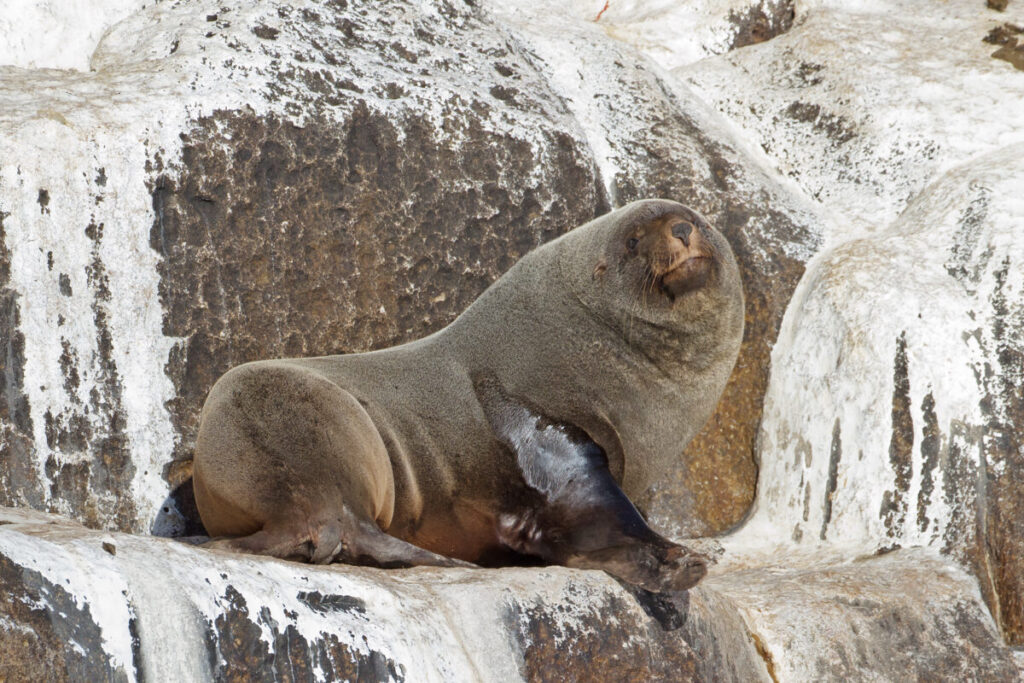
Brown fur seals thrive in a variety of ecosystems, including rocky coastlines, islands, and sandy beaches. They are well-adapted to marine environments and rely on these coastal areas for breeding, molting, and foraging. These habitats provide the seals with access to their primary food sources, including bony fish species, squid, and octopus.
Facts About Brown Fur Seal
- The Cape fur seal, a subspecies of the brown fur seal, can weigh from 200 to 350 kg and reach an average length of 2.3 meters (source: Animal Diversity Web).
- The total number of brown fur seals is estimated to be around 2,120,000 individuals, including 2,000,000 Cape fur seals and 120,000 Australian fur seals (source: Animalia.bio).
- Adult male Australian fur seals (bulls) can grow to be 200-225 cm in length and weigh between 220-360 kg (source: Australian Government Department of Agriculture, Water and the Environment).
- The Australian subspecies of the brown fur seal, known as Arctocephalus pusillus doriferus, primarily captures large prey (source: ScienceDirect).
- Cape fur seals are the largest fur seal species, with colonies ranging from a few dozen individuals to several thousand seals (source: Ocean Adventures).
- The brown fur seal is also referred to as the South African fur seal and the Australian fur seal (source: Simple English Wikipedia).
- The Australian fur seal population was significantly impacted by hunting, with an estimated 200,000 seals killed for their fur in the 18th-19th centuries (source: Pinnipeds.org).
- The brown fur seal exhibits a high degree of sexual dimorphism, with males being 3.5 to almost 4.5 times heavier than females (source: OBIS-SEAMAP).
- The brown fur seal is known for its agility in capturing prey and its ability to thrive in varied marine environments (source: ScienceDirect).
- Brown fur seals are known for their social behavior and can form colonies of various sizes, exhibiting complex social structures (source: Ocean Adventures).


