

Description
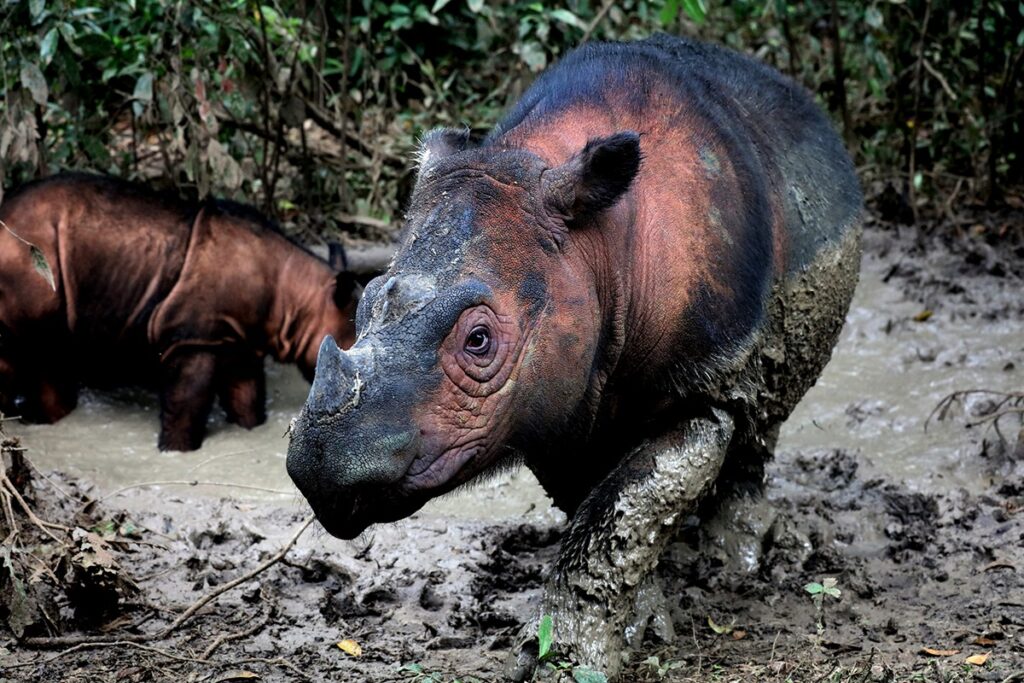
The Bornean rhinoceros, scientifically known as Dicerorhinus sumatrensis harrissoni, is a critically endangered subspecies of the Sumatran rhinoceros. It is characterized by its small size, fringed ears, reddish-brown skin covered in long hair, and distinctive wrinkles around the eyes. This solitary mammal is primarily known for its elusive nature and is a vital focus of conservation efforts due to its dwindling population.
Appearance
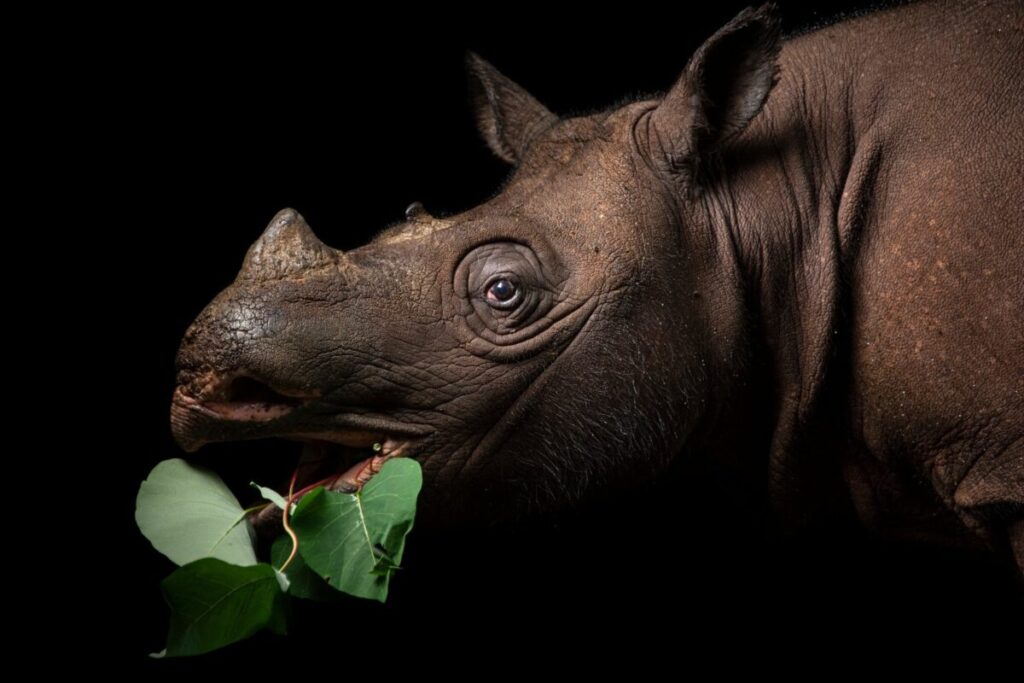
The Bornean rhinoceros possesses unique physical attributes that distinguish it from other rhinoceros species. Unlike its counterparts, this subspecies is notably smaller in size and adorned with long hair covering its reddish-brown skin. The fringed ears and pronounced wrinkles around the eyes further contribute to its distinctive appearance, making it a remarkable and recognizable species within the rhinoceros family.
Distribution
The Bornean rhinoceros is endemic to the island of Borneo in Southeast Asia. Historically, it roamed across a wider range, including parts of Indonesia, Malaysia, and possibly other regions. However, due to habitat loss and poaching, its population has significantly declined, and it is now believed to be functionally extinct in the wild, with only a few individuals remaining in captivity.
Habitat Preferences

These rhinoceroses are primarily found in dense rainforests and swamps, favoring habitats with abundant vegetation and access to water sources. The species’ survival and well-being are intricately linked to the conservation of these vital ecosystems, as they provide the necessary resources for feeding, breeding, and shelter. The Bornean rhinoceros plays a crucial role in maintaining the balance of its natural habitat, making the preservation of these environments essential for its continued existence.
This comprehensive profile encapsulates the unique characteristics, appearance, distribution, and habitat preferences of the Bornean rhinoceros, shedding light on the importance of conservation efforts to protect this critically endangered species.
Facts About Bornean rhinoceros
- The Bornean rhinoceros (Dicerorhinus sumatrensis harrissoni) is one of the most endangered rhinoceros species, with an estimated population of fewer than 80 individuals.
- Bornean rhinoceroses are the smallest living species of rhinoceros, standing about 112-145 cm at the shoulder and measuring about 2.36-3.18 m in length.
- These rhinos are known for their characteristic reddish-brown to dark gray skin, and they have a unique, long, coarse, and reddish-brown hair coat.
- Bornean rhinoceroses are primarily found in the dense tropical forests of Borneo, and they are mainly solitary animals, except during courtship and when rearing offspring.
- The diet of Bornean rhinoceroses consists mainly of fruit, leaves, twigs, and other vegetation, and they are known to feed on a variety of plant species.
- These rhinos are primarily active during the early morning and late afternoon, and they are known to wallow in mud and water to regulate their body temperature and protect their skin from parasites.
- Female Bornean rhinoceroses have a gestation period of about 15-16 months, and they usually give birth to a single calf, which they care for over an extended period.
- Bornean rhinoceroses are known for their vocalizations, which include snorting, honking, and other sounds used for communication, especially during courtship and territorial disputes.
- Conservation efforts for Bornean rhinoceroses include habitat protection, captive breeding programs, and anti-poaching measures aimed at safeguarding the remaining population.
- The Bornean rhinoceros is a critically endangered species, facing severe threats from habitat loss, fragmentation, and poaching, highlighting the urgent need for conservation action to ensure its survival.


