
The Bornean ferret badger, scientifically known as Melogale everetti, is a fascinating small mammal that is endemic to the island of Borneo. As a member of the family Mustelidae, it is one of five species within the genus Melogale. This elusive creature is primarily nocturnal, and its unique characteristics and habitat preferences make it a subject of interest for wildlife enthusiasts and conservationists.
Description

The Bornean ferret badger is a small mammal with a slender body and short legs. It is characterized by a distinctive black and white facial pattern, with a dark mask across its eyes and a white stripe running from the nose to the back of the head. Its fur is typically dark brown or black on the upper body, while the underparts are lighter in color. This species has a long, bushy tail and sharp claws, which are adaptations for its semi-arboreal lifestyle and foraging behavior.
Appearance
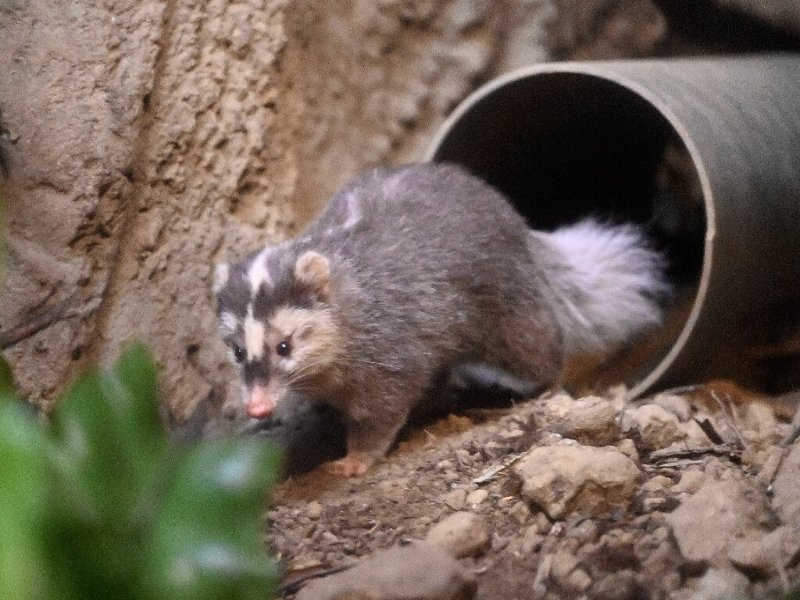
One of the key distinguishing features of the Bornean ferret badger is its unique facial markings, which set it apart from other species within the genus Melogale. This species can be differentiated from similar mustelids by its specific coloration and facial patterns, making it easily identifiable in the wild.
Distribution
The Bornean ferret badger is predominantly found on the island of Borneo, with its range extending across specific regions of the island. Its distribution is primarily associated with the mountainous areas of Borneo, including Mt. Kinabalu in Kinabalu Park, located in the state of Sabah, Malaysia. The species’ population density is notable in these specific regions, reflecting its adaptation to the unique ecosystems found in the mountainous terrain of Borneo.
Habitat Preferences

The habitat preferences of the Bornean ferret badger are predominantly associated with evergreen and montane forests. These ecosystems provide the necessary cover and resources for the species’ survival, as it is well-adapted to the forested and mountainous terrain of its native habitat. The Bornean ferret badger’s ability to thrive in these environments is a testament to its resilience and its specialized ecological niche within the island of Borneo.
Overall, the Bornean ferret badger, with its unique characteristics and specific habitat requirements, represents an intriguing subject for further research and conservation efforts aimed at preserving the biodiversity of Borneo’s ecosystems.
Facts About Bornean Ferret Badger
- The Eastern chimpanzee (Pan troglodytes schweinfurthii) is listed as endangered by the IUCN.
- Their population ranges from the Ubangi River/Congo River in Central African Republic and DRC to western Uganda, Rwanda, and western Tanzania.
- Eastern chimpanzees are omnivorous, consuming seeds, fruits, honey, leaves, bark, fungi, insects such as termites and ants, and small prey such as birds and monkeys.
- They inhabit a range of habitats, including tropical rainforests and montane rainforests at altitudes of up to 3,000 meters.
- The scientific name for the Eastern chimpanzee is Pan troglodytes schweinfurthii.
- Their population is estimated to be between 172,700 to 299,700 individuals.
- Eastern chimpanzees are highly adaptable and can be found in forests, savannah woodlands, and even in moist and dry forests.
- This subspecies occurs in Uganda, Tanzania, Southern Sudan, Rwanda, Burundi, and the Central African Republic.
- They are known for using tools, such as sticks for extracting termites from mounds and stones for cracking open nuts.
- Eastern chimpanzees have complex social structures and exhibit a wide range of behaviors, including communication through vocalizations and gestures.


