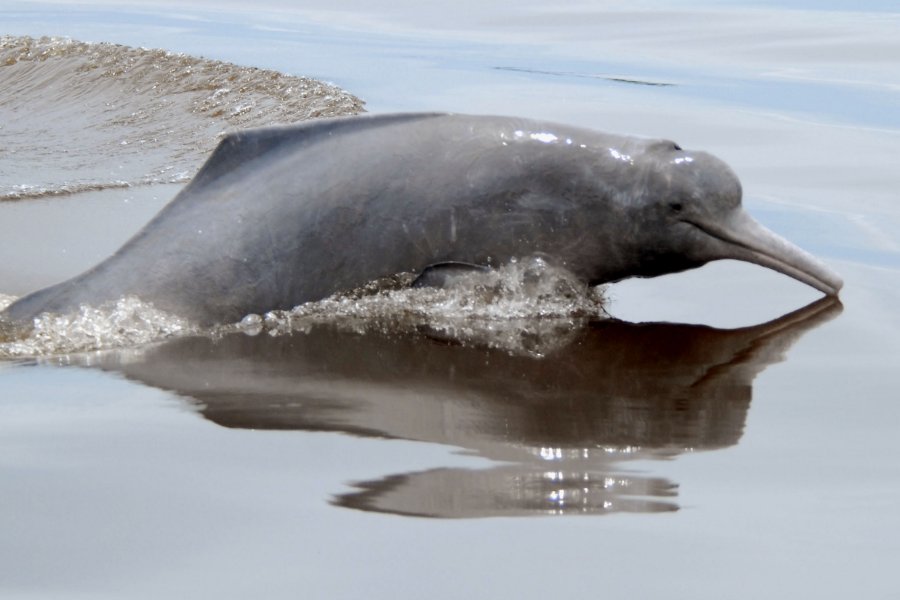
Bolivian River Dolphin

IUCN Red List Conservation Status


Data Deficient

This species has no threat category on the IUCN Red List scale (status: Data Deficient), so no threat level is shown.


Species Quick Facts

Scientific Name
Inia boliviensis

Average Lifespan
30-35 years in wild, 35-40 years in captivity

Average Weight
130-200 kg (286-441 lbs) – Males: 150 kg, Females: 130 kg

Average Length
150-200 cm (59-79 inches) – head-body length excluding tail

Overview & Identification

The Bolivian river dolphin (Inia boliviensis) is a freshwater cetacean belonging to the family Iniidae, order Cetacea. Endemic to the upper Amazon basin of Bolivia, it inhabits the Madeira, Beni, and Mamorรฉ river systems and their tributaries, extending into adjacent parts of Brazil and Peru. Unlike marine dolphins, this species has a flexible neck, a long, slightly upturned beak, and a modest dorsal fin that is often reduced to a ridge. Its skin ranges from grayโ€‘brown to a distinctive pink hue that intensifies with age and exposure to sunlight. Adults reach 150โ€“200โ€ฏcm in headโ€‘body length and weigh 130โ€“200โ€ฏkg, with males generally larger than females. The Bolivian river dolphin prefers turbid, slowโ€‘moving waters, flooded forests, and riverine floodplains where it can navigate complex underwater structures. It is a top predator in its ecosystem, relying on echolocation to locate prey in lowโ€‘visibility habitats. The species is listed as Data Deficient by the IUCN because population trends are poorly known, but habitat loss, dam construction, and incidental capture threaten its survival. Conservation initiatives focus on river management, protected areas, and community education to mitigate human impacts.

Behavior & Social Structure

Bolivian river dolphins are gregarious yet fluid in their social organization. Groups typically consist of two to ten individuals, often comprising a mother with her calf and a few unrelated adults; larger aggregations may form around abundant fish schools or during the flood season. The dolphins are primarily diurnal, spending daylight hours foraging and resting near the surface, and they surface to breathe every few minutes. They maintain overlapping home ranges rather than strict territories, moving extensively through the river network in response to seasonal water level changes. Communication relies on a repertoire of clicks, whistles, and burstโ€‘pulse sounds that convey identity, location, and reproductive status. Echolocation clicks, emitted at frequencies up to 150โ€ฏkHz, enable precise navigation in the dark, murky waters. Social bonds are reinforced through synchronized swimming, tactile contact, and cooperative hunting, especially when targeting schooling fish in flooded forests.

Diet & Hunting Patterns

The Bolivian river dolphin is a strict carnivore, preying on a wide variety of freshwater fish such as characins, catfish (Pimelodidae), and cichlids, which constitute the bulk of its diet. It also consumes crustaceans, especially large shrimp and freshwater crabs, and occasionally opportunistic prey like small turtles, amphibians, and cephalopods. Feeding is highly opportunistic; dolphins use echolocation to detect the shape and movement of prey hidden in the turbid water and flooded vegetation. In the flood season, they exploit the inundated forest canopy where fish disperse, employing rapid, agile maneuvers to herd schools into shallow channels. Daily food intake can reach up to 5โ€ฏ% of body weight, and individuals may travel several kilometers each day to follow fish migrations and seasonal prey concentrations.

Reproduction & Life Cycle

Females reach sexual maturity at about five to six years, while males mature slightly later at six to seven years. Breeding occurs yearโ€‘round but peaks during the highโ€‘water season when prey is most abundant. After a gestation period of roughly 11โ€“12 months, a single calf is born, measuring about 70โ€ฏcm and weighing 10โ€ฏkg. Calves are nursed for up to two years, during which the mother provides all care and protection; the young remain closely attached, riding on the motherโ€™s flank while she forages. Weaning is gradual, and juveniles continue to associate with their natal group for several years before attaining full independence. Longevity in the wild can exceed 30 years, allowing females to reproduce multiple times over their lifespan, though reproductive rates are low due to the long interval between births.

Threats & Conservation

The IUCN classifies the Bolivian river dolphin as Data Deficient, reflecting limited knowledge of population size, which is estimated to be fewer than 10,000 mature individuals. Major threats stem from rapid riverine development: dam construction fragments habitat, alters flow regimes, and blocks migratory routes for both dolphins and their fish prey. Pollution from mining and agriculture introduces heavy metals, notably mercury, which bioaccumulates in the food web and impairs dolphin health. Byโ€‘catch in gillโ€‘nets and illegal fisheries remains a significant mortality source, while occasional intentional killings occur for bait or due to perceived competition with fisheries. Climate change may exacerbate floodโ€‘pulse alterations, further stressing the ecosystem. Conservation actions include establishing protected river sections, promoting dolphinโ€‘safe fishing gear, conducting population surveys, and engaging local communities in stewardship programs.

Interesting Facts

โ€ข The Bolivian river dolphin can rotate its neck up to 180ยฐ, a rare ability among cetaceans.
โ€ข Its pink coloration intensifies with age and is caused by capillary blood vessels near the skin surface.
โ€ข It uses echolocation clicks up to 150โ€ฏkHz, higher than most marine dolphins, to navigate murky waters.
โ€ข Unlike many dolphins, it lacks a true dorsal fin; instead, it has a low ridge that reduces drag in shallow rivers.
โ€ข The species can remain submerged for up to 12 minutes, allowing it to dive deep into flooded forests in search of prey.

Description

Bolivian River Dolphin

The Bolivian river dolphin, scientifically known as Inia boliviensis, is one of four freshwater river dolphin species found in South America. Locally referred to as “bufeo,” this fascinating mammal is known for its unique adaptations to the freshwater environment and its distinct behavioral characteristics.

Appearance
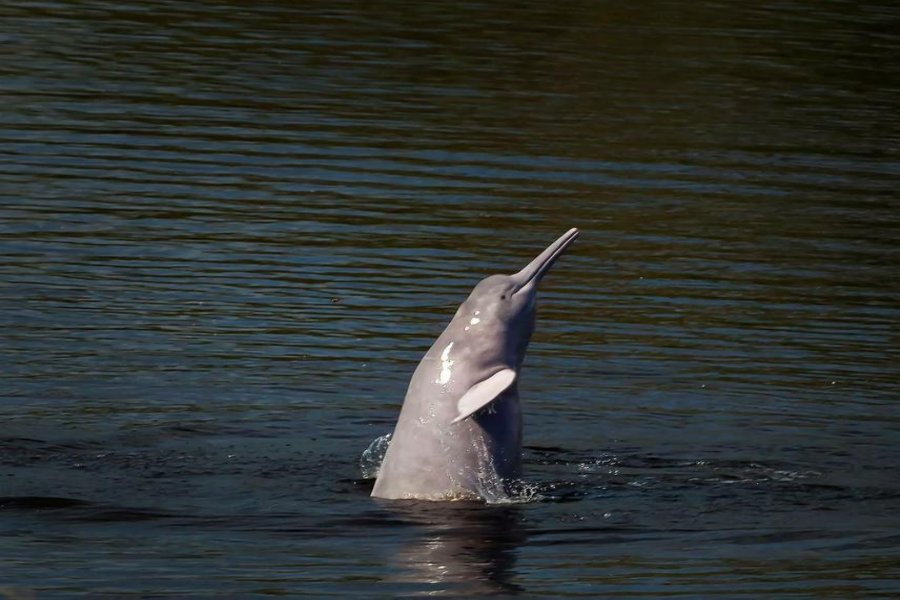
Bolivian River Dolphin Appearance

The Bolivian river dolphin is characterized by its striking pinkish coloration, which sets it apart from other river dolphin species. It has a robust body, a long beak, and a prominent forehead, giving it a distinctive appearance. This species is slightly smaller than other river dolphin species, with adult individuals typically reaching lengths of 1.5 to 2.5 meters.

Distribution

The Bolivian river dolphin is primarily found in the freshwater river systems of the Bolivian Amazon, particularly in the upper reaches of the Madeira River, upstream of the rapids of Teotonio in Bolivia. This species is known to inhabit specific areas within the Bolivian Amazon, and its distribution is relatively localized compared to other river dolphin species.

Habitat Preferences

Bolivian River Dolphin Habitat

These dolphins thrive in the complex and dynamic ecosystems of freshwater rivers, where they rely on a diverse range of habitats for feeding, breeding, and social interactions. The Bolivian river dolphin is well adapted to the intricate network of river channels, oxbow lakes, and flooded forests that characterize its habitat. These environments provide essential resources such as fish, crustaceans, and other prey items that support the survival and well-being of the species.

As a renowned expert in animal conservation and research, I hope this species profile provides valuable insights into the unique characteristics and ecological significance of the Bolivian river dolphin.

Facts About Bolivian River Dolphin

  • The Bolivian river dolphin (Inia boliviensis) is the largest freshwater dolphin in the world, reaching up to 2.8 meters (9.2 feet) in length and weighing as much as 180 kilograms (400 pounds).
  • The Bolivian river dolphin is one of four freshwater river dolphin species in South America and is locally known as “bufeo.”
  • The average group size of Bolivian river dolphins in the San Martin River is 2.4 individuals, with group sizes ranging between 1 and 7.
  • The species faces significant threats, including hunting, fishing, pollution, and habitat degradation, leading to a rapid reduction in its populations.
  • The Bolivian river dolphin is classified as Endangered due to the decline in its populations caused by poaching and accidental capture.
  • There have been 63 population abundance estimates for the Bolivian river dolphin across 17 reviewed publications, indicating efforts to monitor and assess its population status.
  • The species inhabits the rivers of Bolivia and is an important indicator of the health of freshwater ecosystems in the region.
  • Bolivian river dolphins are gray above and pale below, with a distinct appearance that sets them apart from other dolphin species.
  • Data analysis of Bolivian river dolphin abundance is based on direct counts and summarized as the number of sightings and the number of individuals observed.
  • Scientists and fishers have collaborated to protect the Bolivian river dolphin, highlighting conservation efforts and community involvement in safeguarding the species.


Scientific Provenance & Verified Sources

Biological taxonomy, conservation status, and physical traits are cross-referenced with authoritative global registers:


Peer-reviewed by Wildlife Science Editors โ€ข Updated for 2026

Explore Other Species Profiles