

Description

The Australian Fur Seal, scientifically known as Arctocephalus pusillus, is a charismatic species of fur seal that belongs to the Otariidae family. This species is also referred to as the brown fur seal, Cape fur seal, and South African fur seal. Australian Fur Seals are known for their robust and streamlined bodies, which are adorned with a thick layer of brown or gray fur, providing insulation and protection in their marine environment. These seals exhibit remarkable agility in water, where they are highly skilled and adept hunters.
Appearance
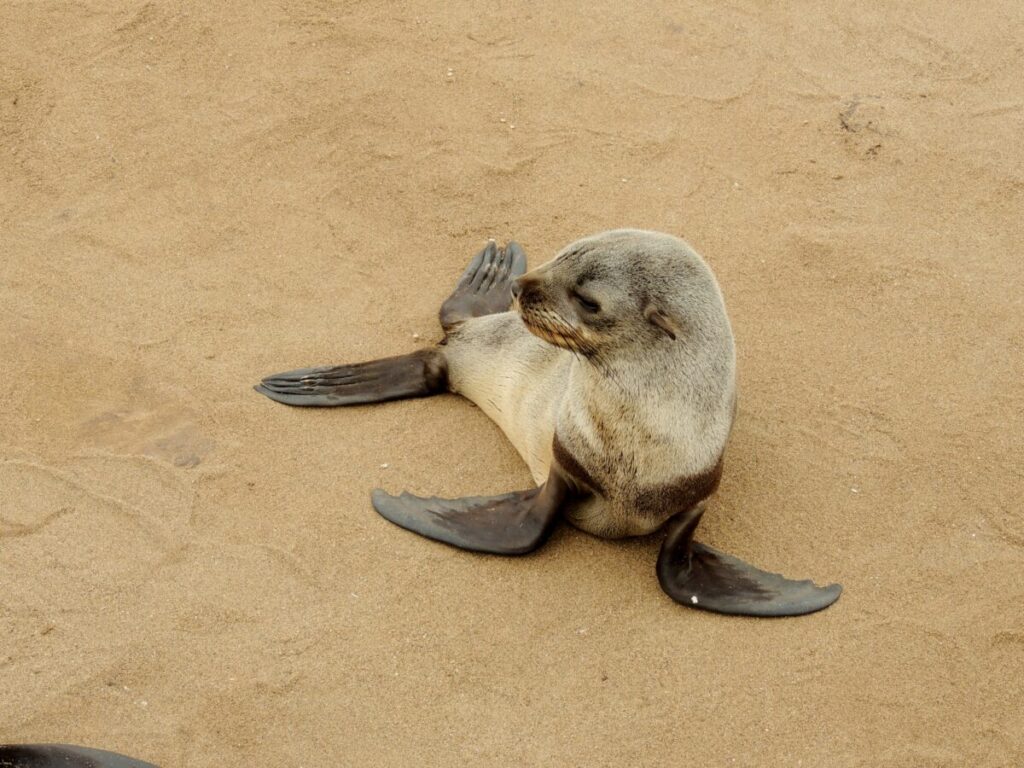
Australian Fur Seals are distinguished by their large, dark eyes and prominent, broad snouts. Their bodies can reach lengths of 125-225 cm and weigh between 50-360 kg, making them one of the larger species of fur seals. The fur of the Australian Fur Seal is notably darker than that of other fur seal species, with a rich brown or gray coloring that sets them apart. Males are typically larger than females and display a more robust build, particularly evident during the breeding season when they develop a distinctive mane of coarse guard hairs around their neck and shoulders.
Distribution
Australian Fur Seals are primarily found along the southern coastlines of Australia, with significant populations inhabiting regions such as Tasmania, Victoria, and New South Wales. They are also known to frequent the coastal waters of southern Africa. These seals can be observed in colonies along rocky shorelines and islands, where they congregate for breeding, molting, and resting. The population density of Australian Fur Seals varies across different locations, with some colonies supporting larger numbers due to favorable environmental conditions and abundant food sources.
Habitat Preferences
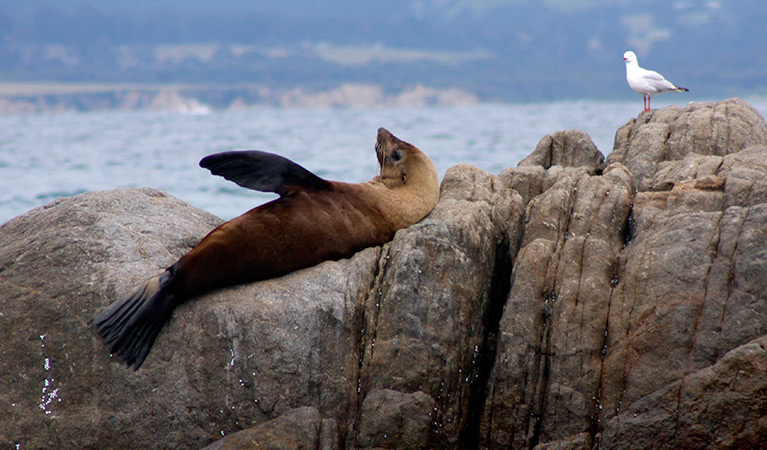
Australian Fur Seals are highly adapted to a marine lifestyle and are commonly found in nearshore waters, particularly in areas with rocky outcrops and islands that provide suitable haul-out sites. They rely on a diverse range of marine ecosystems, including coastal waters, estuaries, and offshore islands, where they forage for a diet consisting of bony fish, squid, and octopus. These environments play a crucial role in supporting the survival and well-being of Australian Fur Seals by providing access to food resources and safe breeding grounds.
Overall, the Australian Fur Seal is an iconic species that embodies the resilience and adaptability of marine mammals, showcasing the intricate relationship between their unique characteristics and the environments they inhabit.
Facts About Australian Fur Seal
- Australian fur seal pups weigh 4.5 to 12.5 kg and measure 62-80 cm in length at birth (source: Animal Diversity Web).
- The Australian fur seal is the largest of all fur seals, with a broad head, pointed snout, and long backward sweeping (source: The Australian Museum).
- The Australian fur seal is the world’s fourth-rarest seal species (source: Tasmanian Government).
- It is estimated that 200,000 Australian fur seals were killed for their fur in the 18th – 19th centuries (source: Pinnipeds.org).
- Both sexes of Australian fur seals are heavier than females of the Cape fur seals (source: OBIS-SEAMAP).
- The Australian fur seal preys on squid and school fish, as well as bottom-dwelling (source: NSW Government).
- The Australian subspecies of the brown fur seal (A. pusillus doriferus) captures large prey (source: ScienceDirect).
- The Australian fur seal is listed as a vulnerable species (source: NSW Government).
- Australian fur seals have a silver-gray color and their entire ventral side is yellow at birth (source: Animal Diversity Web).
- The Australian fur seal is also known as the Cape fur seal, South African fur seal, and Brown fur seal (source: Wikipedia).


