IUCN Red List Conservation Status


Near Threatened

LC
NT
VU
EN
CR
EW
EX

Official assessment evaluated in accordance with the IUCN Red List of Threatened Species criteria: Near Threatened.


Species Quick Facts

Scientific Name
Capra falconeri cashmiriensis

Average Lifespan
10-15 years in wild, 20-25 years in captivity

Average Weight
45-115 kg (99-254 lbs) – Males: 80 kg, Females: 60 kg

Average Length
120-150 cm (47-59 inches) – head-body length excluding tail

Overview & Identification

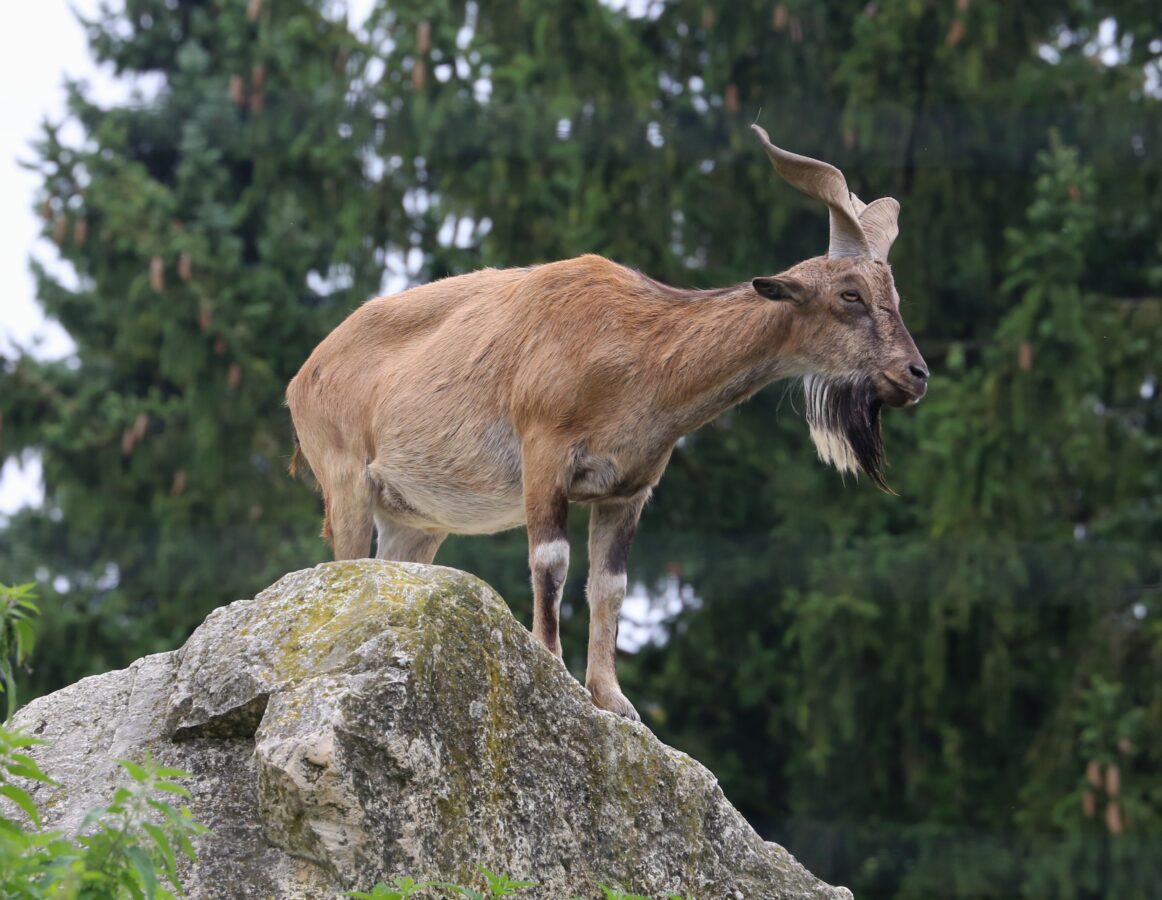
The Astor markhor (Capra falconeri cashmiriensis) is a subspecies of the wild goat known as the markhor, belonging to the family Bovidae and the subfamily Caprinae. Endemic to the rugged northern slopes of the Himalayas in Pakistanโ€™s Khyber Pakhtunkhwa and Gilgitโ€‘Baltistan provinces, it inhabits steep, forested cliffs, alpine meadows and rocky talus at elevations of 1,200โ€“3,500โ€ฏm. Males are distinguished by massive, spiraled horns that can exceed 150โ€ฏcm in length, while females bear shorter, thinner horns. The coat is a coarse, reddishโ€‘brown in summer that turns darker and denser in winter, providing insulation against harsh weather. The Astor markhor is adapted to a highly fragmented landscape, relying on steep terrain to evade predators such as snow leopards and wolves. Historically hunted for its impressive horns, the subspecies now faces pressure from poaching and habitat loss, prompting inclusion in CITES Appendixโ€ฏI and targeted conservation programs that involve communityโ€‘based livestock compensation and antiโ€‘poaching patrols. Current estimates suggest a wild population of roughly 2,500โ€“3,000 mature individuals, making it one of the more vulnerable markhor populations.

Behavior & Social Structure

Astor markhors are primarily crepuscular, becoming most active at dawn and dusk when temperatures are moderate. They live in small, mixedโ€‘sex groups of 5โ€“15 individuals during the summer, but older males often become solitary or form bachelor groups that patrol overlapping territories of up to 30โ€ฏkmยฒ. Females and their offspring maintain a core home range that they defend through scent marking, horn displays and occasional vocalizations such as sharp bleats. Communication relies heavily on visual signals; males clash their horns in ritualized contests to establish dominance without causing serious injury. Territorial boundaries are reinforced by rubbing horns on prominent rocks, leaving scent and visual marks. In winter, groups congregate in lower valleys where forage is more abundant, reducing the need for large territories. Predation pressure from snow leopards, wolves and golden eagles influences vigilance behavior, with individuals frequently scanning the horizon and using steep cliffs as escape routes.

Diet & Hunting Patterns

The Astor markhor is a strict herbivore, feeding primarily on a seasonal mix of grasses, forbs, shrubs and woody browse. In the highโ€‘altitude summer meadows, it grazes on graminoids such as Festuca and Poa species, supplementing the diet with herbaceous plants like Gentiana and Primula. During the winter months, when snow covers herbaceous growth, the markhor shifts to browsing on dwarf shrubs such as Juniperus, Betula and Salix, as well as the bark and twigs of Rhododendron. Daily intake can reach 3โ€“5โ€ฏkg of dry matter, with higher consumption during the lactation period to meet the energetic demands of milk production. Foraging is selective; individuals prefer nutrientโ€‘rich, lowโ€‘tannin foliage and avoid plants containing high concentrations of secondary compounds. Water is obtained from meltwater streams and dewโ€‘laden vegetation, and the species can survive several days without direct drinking in winter. Seasonal migrations between alpine pastures and lower valleys allow the markhor to exploit the most nutritious forage while minimizing competition with domestic livestock.

Reproduction & Life Cycle

Females reach sexual maturity at 2.5โ€“3โ€ฏyears, while males mature later at 4โ€“5โ€ฏyears, reflecting the need for larger horn development before successful competition. The rut occurs from late November to early January, when males descend from higher summer pastures to the femalesโ€™ wintering grounds. Mating is polygynous; dominant rams secure harems of up to six females through repeated horn clashes and vocal displays. After a gestation period of 150โ€“165โ€ฏdays, usually a single kid is born in late spring (Mayโ€“June) when alpine vegetation begins to flourish. Kids are precocial, standing within an hour of birth and following the dam to nurse. The mother hides the newborn in a concealed ledge for the first 2โ€“3โ€ฏweeks, reducing predation risk. Kids are weaned at 3โ€“4โ€ฏmonths and gradually integrate into the maternal group. Birth intervals average 1.5โ€ฏyears, and reproductive success is closely tied to habitat quality and predation pressure.

Threats & Conservation

The IUCN Red List classifies the Astor markhor as Near Threatened, with an estimated 2,500โ€“3,000 mature individuals remaining in the wild. The principal threats are illegal hunting for its prized spiral horns, which are prized in traditional medicine and as trophies, and competition with livestock for limited alpine forage. Habitat fragmentation caused by expanding road networks, mining, and hydroโ€‘electric projects reduces connectivity between seasonal ranges, increasing the risk of inbreeding and limiting escape routes from predators. Predation by snow leopards and wolves, while natural, can become a significant mortality factor when humanโ€‘induced stress lowers herd vigilance. Conservation initiatives include the establishment of communityโ€‘managed protected areas, antiโ€‘poaching patrols, and a livestockโ€‘compensation scheme that offsets losses incurred by predation, thereby reducing retaliatory killings. The species is listed in CITES Appendixโ€ฏI, prohibiting international trade of its parts. Ongoing monitoring suggests a modest population increase of 2โ€“3โ€ฏ% per year in areas where community engagement is strong, but without sustained effort the subspecies could slip toward Endangered status within the next decade.

Interesting Facts

โ€ข The Astor markhorโ€™s horns can grow up to 150โ€ฏcm, forming a distinctive corkscrew shape.
โ€ข It is the national animal of Pakistan, symbolizing strength and resilience.
โ€ข Markhors can leap distances of up to 3โ€ฏm across sheer cliffs to escape predators.
โ€ข Their wool is highly valued locally for making warm, traditional garments.
โ€ข Communityโ€‘based conservation in the Chitral region has helped increase local populations by over 20โ€ฏ% in the past decade.

Description

The Astor markhor, also known as the flare-horned markhor, is a striking subspecies of the markhor, a wild goat species native to the mountainous regions of Kashmir and northern Pakistan. This majestic creature is renowned for its impressive spiral horns, which can reach remarkable lengths and are a defining feature of the species. The Astor markhor possesses a robust and muscular build, adapted to navigate the rugged terrain of its natural habitat. Its coat varies in color, typically displaying shades of brown, gray, and black, providing effective camouflage in its mountainous surroundings.

Appearance
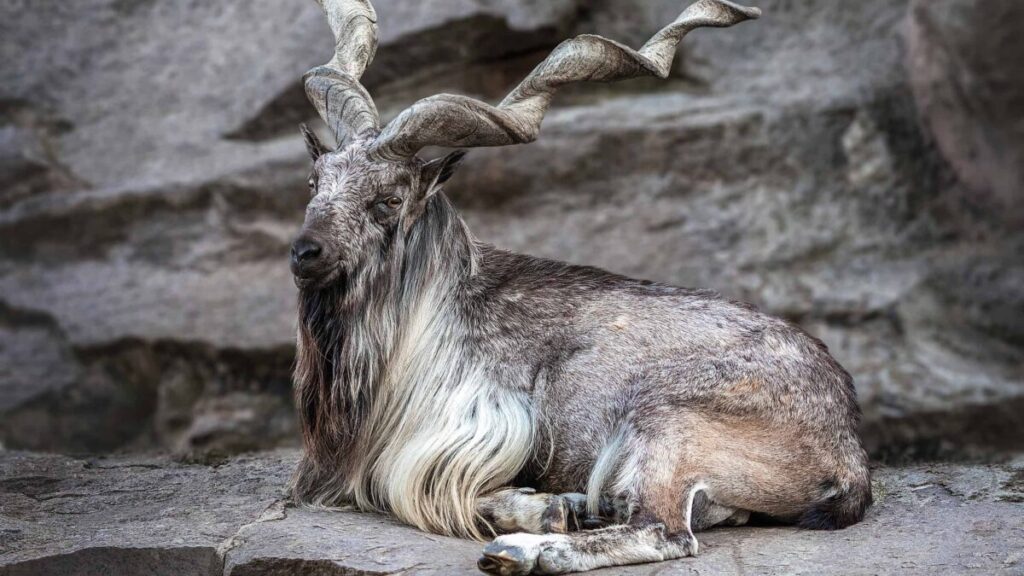
The most distinctive feature of the Astor markhor is its magnificent, corkscrew-shaped horns, which can grow to be several feet in length. These impressive horns, with their unique spiral structure, distinguish the Astor markhor from other wild goat species. In addition to its formidable horns, the Astor markhor boasts a regal bearing, with a proud stance and a thick, shaggy coat that aids in insulation against the harsh mountain climate.

Distribution

The Astor markhor is primarily found in the mountainous regions of Kashmir and northern Pakistan, with its range extending into the easternmost parts of Afghanistan. These rugged and remote areas provide the ideal habitat for the species, allowing it to thrive in relative seclusion. The population density of the Astor markhor is notably concentrated in these specific regions, reflecting its adaptation to the challenging terrain and climatic conditions.

Habitat Preferences

The Astor markhor exhibits a strong preference for inhabiting steep and rocky terrain, often found at high altitudes. It is well-suited to navigating the precipitous slopes and cliffs of its mountainous habitat, where it can seek refuge from predators and access the sparse vegetation that sustains its diet. The species’ ability to thrive in such rugged environments is a testament to its remarkable adaptability and resilience in the face of challenging ecological conditions.

Overall, the Astor markhor’s habitat preferences align with its status as a symbol of strength and endurance in the mountainous landscapes of South Asia, making it a fascinating subject for conservation efforts and further study.

Facts About Astor markhor

  • The Astor markhor (Capra falconeri falconeri) is a subspecies of the markhor, native to Kashmir and northern Pakistan.
  • It is an endangered species with a population density estimated at 0.13 individuals/km2.
  • The male to female ratio of the Astor markhor is approximately 0.69:1.
  • The yearling to female ratio is around 0.54:1, and the kids to female ratio is about 0.51:1.
  • This subspecies has large, flat and wide-branching horns that flare in different directions.
  • The Astor markhor is known for its one and a half twist, out-flaring horns.
  • Each subpopulation, except one, has less than 1,000 individuals.
  • The species is endemic to Gilgit-Baltistan.
  • The Astor markhor is synonymous with Capra falconeri.
  • The current study aimed at collecting reliable data about the population status of Astor Markhor.


Scientific Provenance & Verified Sources

Biological taxonomy, conservation status, and physical traits are cross-referenced with authoritative global registers:


Peer-reviewed by Wildlife Science Editors โ€ข Updated for 2026

Explore Other Species Profiles