Araguaian river dolphin

IUCN Red List Conservation Status


Data Deficient

This species has no threat category on the IUCN Red List scale (status: Data Deficient), so no threat level is shown.


Species Quick Facts

Scientific Name
Inia araguaiaensis

Average Lifespan
30-35 years in wild, 35-40 years in captivity

Average Weight
130-180 kg (286-397 lbs) – Males: 150 kg, Females: 130 kg

Average Length
180-220 cm (71-87 inches) – head-body length excluding tail

Overview & Identification

The Araguaian river dolphin (Inia araguaiaensis) belongs to the family Iniidae, a group of smallโ€‘toโ€‘medium sized freshwater cetaceans endemic to South America. First described in 2014, it inhabits the middle Araguaiaโ€‘Tocantins river basin in central Brazil, occupying main channels, tributaries, and seasonally flooded floodplains. Its streamlined body, flexible neck, and elongated beak enable agile navigation through complex riverine habitats, while a pinkishโ€‘gray dorsal coloration provides camouflage in turbid waters. Unlike marine dolphins, the Araguaian lacks a dorsal fin, instead possessing a low ridge that reduces drag. The species is a top predator in its ecosystem, feeding primarily on fish and occasionally on crustaceans. IUCN currently lists it as Data Deficient, reflecting limited population data, but regional assessments suggest it is vulnerable to habitat degradation. Conservation efforts focus on protecting riverine corridors, mitigating byโ€‘catch in fisheries, and monitoring water quality to ensure the longโ€‘term survival of this unique riverine cetacean.

Behavior & Social Structure

Araguaian river dolphins are highly social, typically forming loose groups of 2โ€‘10 individuals that may merge into larger aggregations during the dry season when prey concentrates in shrinking pools. They exhibit a fissionโ€‘fusion dynamic, with subโ€‘groups splitting and rejoining based on foraging opportunities and reproductive status. Activity peaks at dawn and dusk, when they use echolocation clicks and broadband whistles to locate fish in lowโ€‘visibility waters. Homeโ€‘range sizes are modest, usually confined to 100โ€‘200 km stretches of river, but individuals may travel considerable distances during seasonal floods to exploit new feeding grounds. Communication includes a repertoire of clicks, burstโ€‘pulsed sounds, and body postures such as headโ€‘slapping, which serve to coordinate group movements and maintain social bonds.

Diet & Hunting Patterns

The Araguaian river dolphin is a strict carnivore, primarily preying on a diverse assemblage of freshwater fish such as pimelodid catfish, characins, and cichlids. Seasonal shifts in water level influence prey availability; during the dry season, dolphins target fish congregating in isolated pools, while the flood season allows access to a broader range of species in inundated forest habitats. Daily food intake averages 5โ€‘7% of body weight, roughly 7โ€‘10 kg for an adult, obtained through rapid, highโ€‘frequency echolocation clicks that locate prey in murky water. Feeding strategies include active pursuit, cooperative herding, and occasional opportunistic scavenging of fish caught in gill nets, though this also poses a risk of byโ€‘catch mortality.

Reproduction & Life Cycle

Females reach sexual maturity at 6โ€‘8 years, while males mature slightly later at 7โ€‘9 years. Breeding is not strictly seasonal; conception often coincides with the onset of the rainy season, ensuring abundant prey for lactating mothers. Gestation lasts approximately 11โ€‘12 months, after which a single calf is born, measuring about 70 cm and weighing 10โ€‘12 kg. Calves are nursed for 12โ€‘18 months, during which they remain closely attached to their mothers, learning echolocation and foraging techniques. Maternal care is intensive, with the mother defending the calf from predators and aggressive conspecifics. Interโ€‘birth intervals are typically 2โ€‘3 years, reflecting the energetic demands of raising a calf in a fluctuating river environment.

Threats & Conservation

The IUCN classifies the Araguaian river dolphin as Data Deficient, but regional assessments indicate it faces several acute threats. Habitat loss from dam construction on the Araguaiaโ€‘Tocantins basin fragments river connectivity, alters flow regimes, and reduces floodplain habitats essential for feeding and breeding. Byโ€‘catch in artisanal and commercial fisheries, especially in gillโ€‘net operations, accounts for an estimated 10โ€‘15% annual mortality. Pollution from agricultural runoff, mining tailings, and urban waste degrades water quality, affecting both dolphins and their fish prey. Illegal hunting for meat and traditional uses persists in remote communities. Population estimates suggest fewer than 5,000 mature individuals remain, prompting calls for stricter protection measures, including riverโ€‘wide protected areas and sustainable fisheries management.

Interesting Facts

โ€ข The Araguaian dolphin can rotate its neck up to 90ยฐ, a rare ability among cetaceans.
โ€ข Its pinkish hue intensifies with age and activity, caused by increased blood flow near the skin.
โ€ข Unlike many dolphins, it lacks a dorsal fin, reducing drag in shallow, vegetated waters.
โ€ข It uses a unique โ€œheadโ€‘slapโ€ behavior to communicate alarm or excitement.
โ€ข Genetic studies show it diverged from the Amazon river dolphin less than 2 million years ago.

The Araguaian river dolphin, also known as the Araguaian boto, is a fascinating species of river dolphin native to the Araguaiaโ€“Tocantins basin of Brazil. This elusive mammal is a unique and vital part of the South American aquatic ecosystem, displaying a range of distinctive characteristics.

Description

Araguaian river dolphin

The Araguaian river dolphin belongs to the genus Inia and is characterized by its gray to pink coloration, which sets it apart from other river dolphin species. It possesses a dorsal ridge rather than a fin, a notable feature that distinguishes it from its counterparts.

Appearance
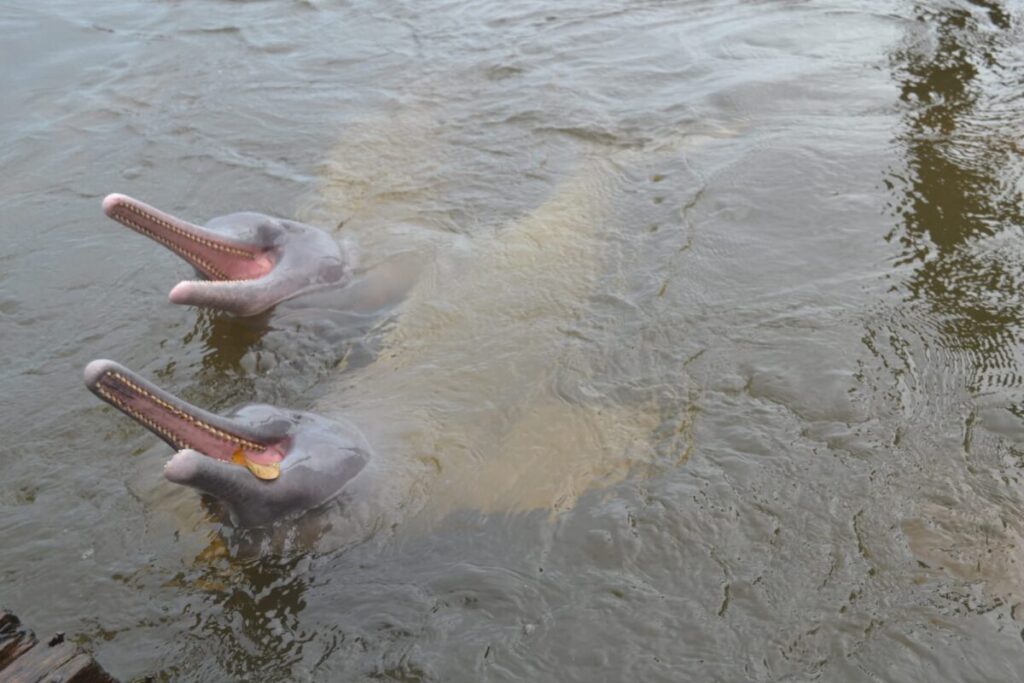
Araguaian river dolphin Appearance

Members of the Inia araguaiaensis species typically have a body length ranging from 1.53 to 2.6 meters (5.0 to 8.5 feet). Their unique coloration and dorsal ridge contribute to their striking appearance, making them easily identifiable within their habitat.

Distribution

The Araguaian river dolphin is exclusively found in the Araguaiaโ€“Tocantins basin of Brazil. This restricted distribution emphasizes the species’ dependence on the specific environmental conditions found within this region. Understanding and preserving this habitat is crucial for the conservation of the Araguaian river dolphin population.

Habitat Preferences
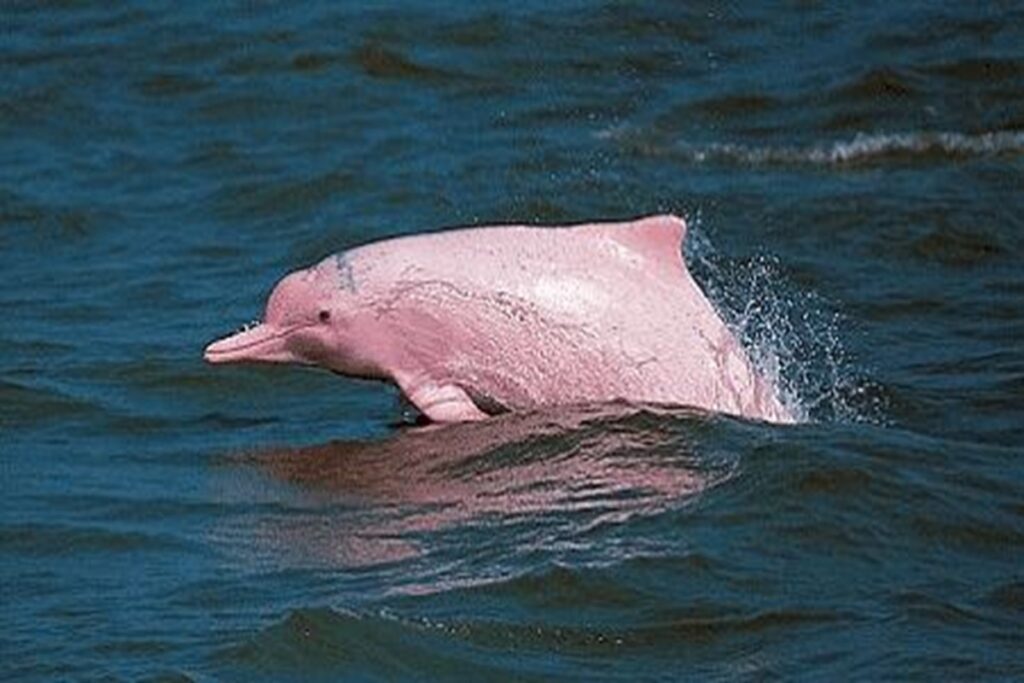
Araguaian river dolphin Habitat

Araguaian river dolphins thrive in the freshwater ecosystems of the Araguaiaโ€“Tocantins basin, preferring the complex network of rivers, channels, and floodplain lakes within this region. These dolphins are adapted to the dynamics of this unique aquatic environment, relying on it for shelter, food, and social interaction. The conservation of these habitats is essential for the well-being and survival of the Araguaian river dolphin population.

With its distinct characteristics and limited distribution, the Araguaian river dolphin is an intriguing and vital species that warrants dedicated conservation efforts to ensure its continued existence in the rich aquatic landscapes of Brazil.

Facts About Araguaian river dolphin

  • The Araguaian river dolphin, or Araguaian boto (Inia araguaiaensis), is a newly described species of river dolphin native to the Araguaia-Tocantins basin of Brazil.
  • It is the first new species of river dolphin discovered in a century, making it a significant and rare find.
  • The Araguaian boto is proposed to be highly endangered due to its restricted distribution, fragmented habitat, and low population size.
  • Genetic analysis has shown the Araguaian boto to be distinct enough from other Amazon dolphins, establishing its unique identity.
  • The population of Araguaian river dolphins is estimated to be around 1,000 individuals within the Araguaia river basin.
  • These river dolphins produce a diverse repertoire of acoustic signals, contributing to their unique communication and social behaviors.
  • A survey to estimate density and abundance observed 138 groups, totaling 198 individuals, along a 600 km stretch of the Tocantins river.
  • The Araguaian river dolphin is among the world’s rarest creatures, adding to its allure and significance in the animal kingdom.
  • Their habitat in the Araguaia-Tocantins basin faces various threats, including habitat fragmentation and human activities, impacting their survival.
  • Conservation efforts are crucial for the protection and preservation of the Araguaian river dolphin species, highlighting the importance of environmental stewardship.


Scientific Provenance & Verified Sources

Biological taxonomy, conservation status, and physical traits are cross-referenced with authoritative global registers:


Peer-reviewed by Wildlife Science Editors โ€ข Updated for 2026

Explore Other Species Profiles