Amazon Weasel (Mustela africana)

IUCN Red List Conservation Status


Least Concern

LC
NT
VU
EN
CR
EW
EX

Official assessment evaluated in accordance with the IUCN Red List of Threatened Species criteria: Least Concern.


Species Quick Facts

Scientific Name
Mustela africana

Average Lifespan
Undocumented for this species; related New World weasels reach up to 8-9 years in captivity

Average Weight
~700 g (24.7 oz)

Average Length
Total length 43-52 cm (17-20 inches), including tail 16-21 cm (6.3-8.3 inches)

Overview & Identification

The Amazon weasel is a small carnivore native to the tropical forests of the Amazon basin in South America. Despite the misleading species name, it is found only in the New World, ranging through Brazil, Peru, and neighboring countries. It is thought to be semiaquatic and to hunt small vertebrates near water.

Behavior & Social Structure

The Amazon weasel (Mustela africana) is a poorly studied mustelid believed to exhibit primarily diurnal to crepuscular activity patterns, though some observations suggest flexibility depending on prey availability and human disturbance. Like most small mustelids, it is presumed to be a solitary forager, coming together with conspecifics only briefly during the breeding season. Its slender, elongated body planโ€”a hallmark of the genus Mustelaโ€”allows it to navigate dense understory vegetation, fallen logs, and riparian corridors throughout its Amazon Basin range with remarkable agility.

Communication in this species likely relies heavily on scent marking via well-developed anal scent glands, a trait common throughout Mustelidae, used to signal territorial boundaries and reproductive status to potential mates. Vocalizations are presumed to be limited to short chitters, hisses, or screams during aggressive encounters or predator defense, consistent with related weasel species. Due to the species’ rarity in field studies and its cryptic, low-density presence in dense tropical forest, direct behavioral documentation remains extremely limited.

Home range size and territoriality data are largely absent from the literature, but based on body size and habitat comparisons with related Neotropical mustelids (such as the long-tailed weasel and tayra), individual ranges are estimated to be moderate, tracking waterways and forest edges where prey density is highest. The species appears well-adapted to a semi-aquatic lifestyle, frequently found near rivers, streams, and flooded forest (vรกrzea) habitats, suggesting swimming and diving may be part of its behavioral repertoire.

Diet & Hunting Patterns

As an obligate carnivore, the Amazon weasel preys on small vertebrates including rodents, small birds, reptiles, amphibians, and likely fish given its strong association with riverine and flooded forest habitats. Foraging is presumed to occur through active, opportunistic hunting along the forest floor, streambanks, and low vegetation, using acute olfactory and auditory senses to locate hidden or burrowing prey. Its elongated body allows it to pursue prey into burrows, crevices, and dense root systems inaccessible to larger predators.

Metabolically, like other mustelids, the Amazon weasel likely possesses a high metabolic rate necessitating frequent feeding, a trait linked to its slender body shape and high surface-area-to-volume ratio, which results in rapid heat loss. Seasonal dietary shifts may occur in response to Amazonian flood pulse cycles, with individuals potentially exploiting aquatic prey more heavily during high-water seasons when terrestrial prey becomes less accessible. Water dependency is presumed to be high given its habitat preference for riparian zones and seasonally inundated forest.

Reproduction & Life Cycle

Specific reproductive data for Mustela africana remains scarce due to the species’ rarity and elusive nature, but reproductive biology is inferred to parallel that of closely related Mustela species. Breeding is likely seasonal, potentially timed to coincide with periods of increased prey abundance following the Amazon’s wet season. The mating system is presumed to be promiscuous or polygynous, with males potentially traveling widely in search of receptive females and providing no direct parental care, consistent with general mustelid reproductive strategies.

Gestation in related small mustelids typically ranges from 30 to 45 days, with litters of 2-6 altricial young born in concealed dens such as hollow logs, burrows, or dense root tangles near water. Females are assumed to provide sole parental care, nursing offspring for several weeks before weaning, after which juveniles disperse to establish independent territories. Sexual maturity is likely reached within the first year of life, mirroring patterns observed in other small-bodied Mustela species.

Threats & Conservation

The primary threat facing the Amazon weasel is habitat loss and fragmentation driven by deforestation for cattle ranching, agriculture, logging, and infrastructure development throughout the Amazon Basin. As a species closely tied to riparian and flooded forest habitats, it is particularly vulnerable to disruptions in hydrology caused by dam construction and water diversion projects, which can alter the flood pulse dynamics essential to its ecosystem. Fragmentation of continuous forest also isolates populations, potentially reducing genetic diversity and limiting dispersal opportunities for this low-density species.

Poaching pressure is minimal compared to larger Amazonian mammals, as the Amazon weasel holds little commercial value for fur or bushmeat trade, though incidental mortality from human-wildlife conflict, road mortality, and pesticide exposure in agricultural zones may pose localized threats. Natural predators likely include larger carnivores such as ocelots, larger mustelids, and birds of prey. Currently classified as Least Concern by the IUCN, the species benefits indirectly from broader Amazon conservation initiatives, including protected area networks and indigenous-managed reserves, though targeted research and monitoring programs specific to this species remain notably absent.

Interesting Facts

  • Scientific Mystery: Despite its species name “africana,” the Amazon weasel has no connection to Africaโ€”the name arose from an early taxonomic labeling error that was never corrected.
  • Rarest Mustelid in South America: It is considered one of the least documented carnivores in the Neotropics, with only a handful of confirmed museum specimens and field sightings recorded.
  • Riverine Specialist: Unlike many terrestrial weasels, this species shows strong affinity for vรกrzea (seasonally flooded) forest, suggesting semi-aquatic adaptations.
  • Elongated Body Plan: Its long, slender frame is a classic mustelid adaptation allowing it to pursue prey directly into burrows and tight crevices unreachable by larger predators.
  • High Metabolic Demand: Small mustelids like this species must eat frequentlyโ€”often multiple times dailyโ€”due to rapid heat loss from their slim body shape.
  • Taxonomic Uncertainty: Some researchers have debated whether Mustela africana is a distinct species or a subspecies complex, given the scarcity of comparative specimens.
  • Least Concern Status: Despite being poorly studied, its wide distribution across the Amazon Basin’s vast forested landscape currently supports a Least Concern conservation classification.

Description

Amazon Weasel (Mustela africana)

The Amazon weasel, also referred to as the tropical weasel, is a captivating species of weasel native to the diverse ecosystems of South America. It is recognized for its sleek and agile build, which enables it to navigate its habitat with remarkable dexterity. This species is distinguished by its distinctive behavioral traits and remarkable adaptability to the intricate rainforest environments.

Appearance
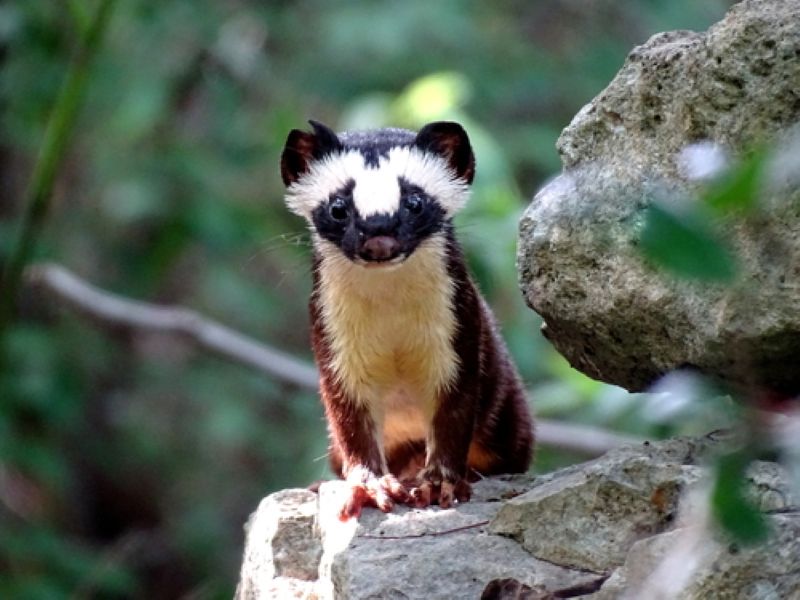
Amazon Weasel

The Amazon weasel is characterized by its slender body, short legs, and a long, bushy tail. Its fur exhibits a rich blend of colors, typically featuring a dark brown or black upper body with a contrasting white or cream underbelly. This striking coloration aids in camouflage within the dense vegetation of its habitat. The Amazon weasel’s elongated body and short legs set it apart from other weasel species, contributing to its exceptional agility and swift movements.

Distribution

The Amazon weasel is primarily found in the lush rainforests of South America, with notable populations in countries such as Ecuador, Bolivia, Brazil, and Peru. Its distribution is closely linked to the expansive Amazon Basin, where it thrives in the intricate ecosystems provided by the tropical rainforests. Despite its wide distribution, the Amazon weasel is known from relatively few localities, underscoring the need for conservation efforts to safeguard its habitat and population.

Habitat Preferences
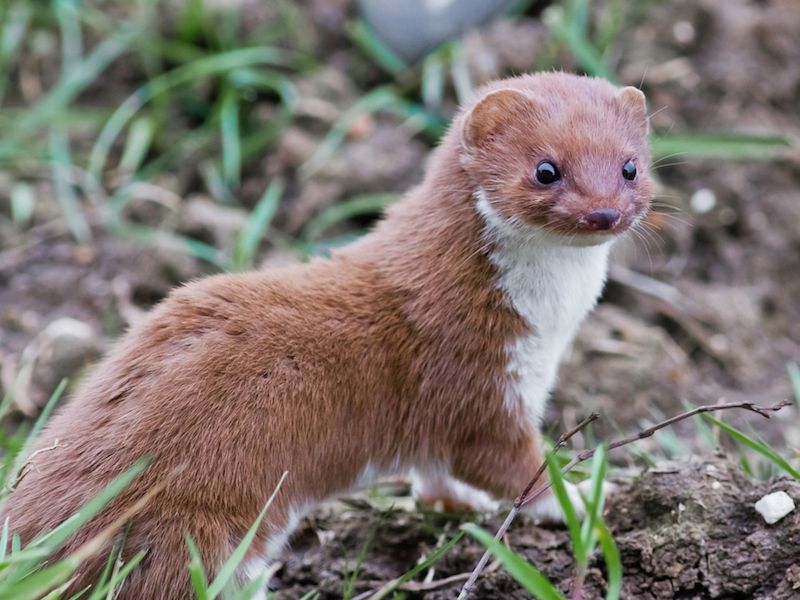
Amazon Weasel Habitat

This species displays a strong preference for the rich and diverse ecosystems of tropical rainforests, where it can take advantage of the abundant vegetation and varied prey species. The closed canopy of the rainforest provides ample cover for the Amazon weasel, allowing it to move stealthily and hunt with precision. Its habitat preferences are closely tied to the intricate balance of the rainforest, where it plays a vital role in the ecosystem as a predator and contributor to the overall biodiversity of the region.

This comprehensive profile captures the unique characteristics and ecological significance of the Amazon weasel, shedding light on its remarkable adaptations and the need for conservation efforts to ensure its continued presence in the biodiverse landscapes of South America.

Facts About Amazon weasel

  • The Amazon weasel (Mustela africana) is native to the Amazon rainforest in South America.
  • It is a small carnivorous mammal belonging to the family Mustelidae.
  • The Amazon weasel is also known as the tropical weasel.
  • This species is endemic to the Amazon Basin and has been recorded in Brazil, Ecuador, and Peru.
  • Amazon weasels are primarily solitary animals and are known for their agility and speed.
  • They have a slender body, short legs, and a long tail, which aids in their movement through dense vegetation.
  • The diet of the Amazon weasel consists of small mammals, birds, reptiles, and insects.
  • Their population status is currently unknown, and they are classified as data deficient by the IUCN.
  • Amazon weasels play a role in controlling populations of small mammals and insects in their habitat.
  • The species faces threats from habitat loss and fragmentation due to deforestation and human activities.


Scientific Provenance & Verified Sources

Biological taxonomy, conservation status, and physical traits are cross-referenced with authoritative global registers:


Peer-reviewed by Wildlife Science Editors โ€ข Updated for 2026

Explore Other Species Profiles