
The Alpine pika, scientifically known as Ochotona alpina, is a fascinating species of small mammal belonging to the pika family, Ochotonidae. This resilient creature is characterized by its remarkable ability to thrive in high alpine environments, showcasing a variety of unique features and behaviors that distinguish it from other species within its habitat.
Description

The summer pelage of the Alpine pika exhibits significant variation among different subspecies, typically ranging from dark or cinnamon brown to grey with a yellowish tinge. Despite its diminutive size, the Alpine pika possesses a robust build, with a distinctive round body and relatively short limbs. Its compact form allows it to navigate the rugged terrain of its alpine habitat with agility and efficiency.
Appearance
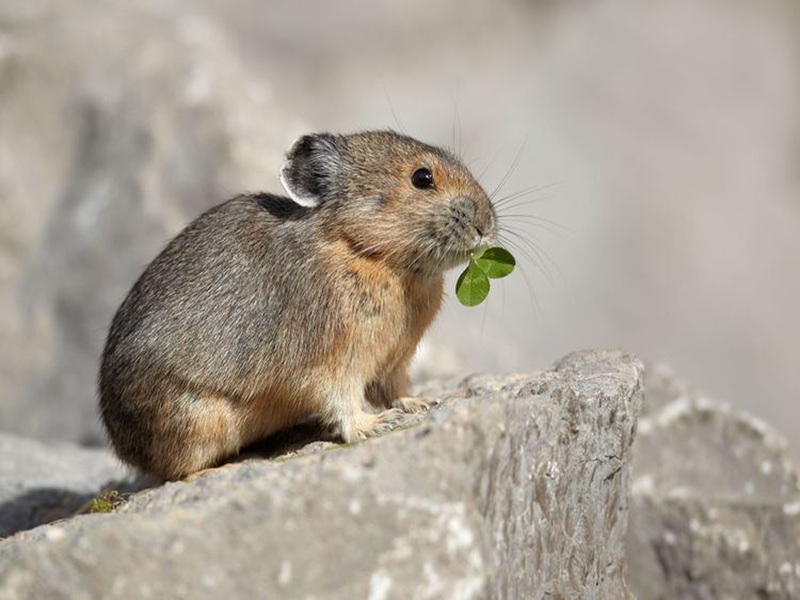
The Alpine pika’s appearance is marked by its compact size, round body, and short limbs, which are well-adapted for life in its alpine habitat. Its fur varies in color, providing effective camouflage against the rocky terrain and alpine vegetation. This species is easily distinguishable from its relatives by its unique combination of physical traits and its preference for high-altitude habitats.
Distribution
The Alpine pika can be found in mountainous regions across several countries, including western Mongolia bordering the Gobi Desert, eastern Kazakhstan, southern Russia (Tuva, Irkutsk, Altai), and other alpine areas. Its distribution is primarily concentrated in high-altitude environments, where it thrives amidst the rocky slopes, talus, and cliffs near mountain meadows.
Habitat Preferences

This species exhibits a strong preference for alpine and mountainous ecosystems, where it inhabits rock faces, talus slopes, and cliffs near mountain meadows. The Alpine pika’s ability to thrive in these challenging environments is a testament to its remarkable adaptations to high-altitude living. These ecosystems provide the ideal conditions for the pika’s survival, offering ample opportunities for foraging, nesting, and seeking shelter from predators.
The Alpine pika’s unique characteristics and its ability to thrive in harsh alpine environments make it a captivating subject for wildlife enthusiasts and conservationists alike. Understanding and preserving the delicate balance of its high-altitude habitat is crucial for ensuring the continued well-being of this remarkable species.
Facts About Alpine pika
- The Alpine pika (Ochotona alpina) is a small mammal in the pika family, Ochotonidae.
- It is found in the mountains of Russia, Kazakhstan, and Mongolia.
- The summer pelage of different subspecies varies in color from gray to reddish-brown.
- The Alpine pika is a solitary herbivore, primarily feeding on grasses, herbs, and other vegetation.
- It is a typical rock dweller, living in hollows and crevices among stones, and it avoids unsteady screes.
- The species is known for its distinctive high-pitched calls, which are used for communication.
- Alpine pikas have a relatively short gestation period, typically lasting around 25-30 days.
- They are well-adapted to cold climates and are active year-round, even in snowy conditions.
- Alpine pikas are important prey for various predators, including birds of prey and carnivorous mammals.
- Due to their habitat preferences and sensitivity to climate change, Alpine pikas are considered an indicator species for monitoring environmental changes in mountain ecosystems.


